There is a man sitting on the floor of a charity shop. He is holding a coat that doesn't belong to anyone who looks like him. He puts it on anyway. The fit is wrong in all the places you can see and right in the one place that matters. He walks out wearing it. Nobody stops him. He walks different.
There was a woman who started serving at tables she couldn't afford to sit at. No family waiting. No account to draw on. She learned by watching failure up close — every morning dressing herself into a person the room had not yet decided to receive. She said it herself, years later on a stage: trends come, trends go. They leave no forwarding address. Style, the real kind, does not live in the wardrobe. It lives in the decision to get dressed the same way whether the room is watching or not.
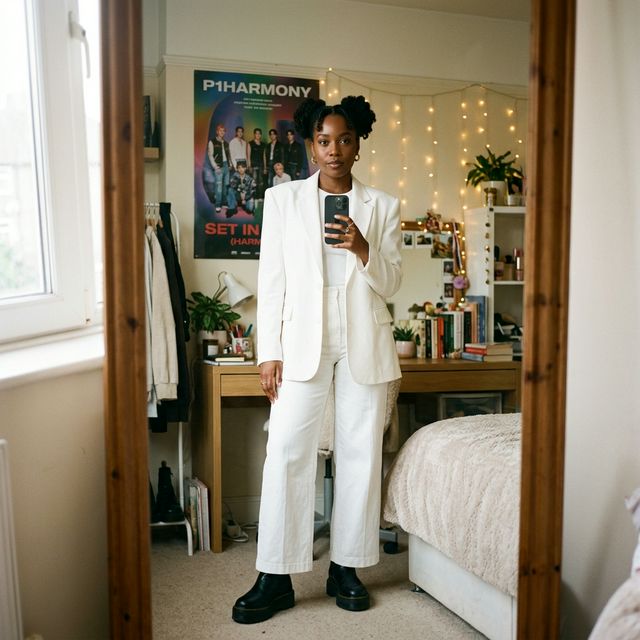
Amara is twenty-two. She lives in South-East London. She found P1Harmony at sixteen and her wardrobe has never fully recovered.
Not because she wanted to copy anyone. Because for the first time she saw something that matched the image she had been carrying quietly inside herself for years — and didn't know what to call it.
P1Harmony gave her something the wardrobe rules never had: a reason to get dressed that belonged only to her.
The structured jacket came first. White. Shoulder-precise. Nothing soft about it. She saved three pay cheques for it. Her mum said it looked like she was going to court. She wore it to a house party and stood in it like it was the only thing in the room she could trust.
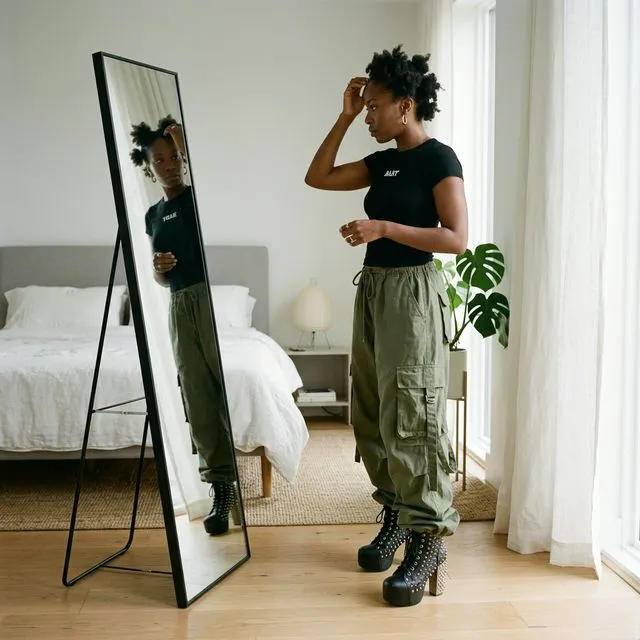
Then the wide-leg trousers. Then the platform boots. The slow, deliberate construction of a visual language that said — I am here. I decided this. The clothes are not an accident.
Her family doesn't understand the clothes. They are not meant to. Her manager at work asked once if she was going to a concert. She said no. Just Tuesday.
The man in the charity shop put on a coat that didn't fit to stay close to something he couldn't afford to lose. He walked out different not because the coat changed him — but because wearing it told him what he already knew he was willing to do.
Amara irons the structured jacket on Sunday nights. Hangs it where she will see it first in the morning. It is not a costume. It is not tribute. It is the answer to the question she has been carrying since she was sixteen, headphones on, pressing play for the first time.
Style is not what you own. It is what you are willing to keep choosing — every morning — whether the room understands it or not.
She doesn't need anyone to get it.
She got it herself. In a bedroom in South London, watching a group of people who dressed like the future and performed like they already lived there.
She took notes. And she has not stopped wearing them since.
The question she asks out loud is whether the office will ever understand. The quieter question — the one she doesn't say — is whether she would dress differently if it did.
Spin the K-Pop Fashion Wheel
Ready to channel your favorite idols? Spin the K-pop streetwear wheel for oversized jackets, crop tops, and combat boots.
Spin the K-Pop Wheel