She finds the boots at the bottom of a cardboard box labelled 'Uni — Keep'. They are heavy. Five inches of stacked wood and a sea of metallic spikes that catch the morning light. When she picks them up, the leather is still stiff, still holding the shape of the woman she was ten years ago—the one who believed the world was waiting for her to arrive in a Y2K outfit for work that didn't exist yet.
She is thirty-two now, and her wardrobe has become a series of quiet compromises. Soft linens. Elasticated waists. Colors that apologize for taking up space. She hasn't touched the spikes in years because they feel like they belong to a loud version of herself that the office isn't ready for. But standing in the quiet of her bedroom, the "Iconic" energy of the 2010s pivot starts to pull at her.
Most people who look for a Y2K outfit for work are looking for a costume. They want the butterfly clips and the low-rise jeans as a joke. But for her, the Spike Lita wasn't a trend; it was a shield. It was the armor she wore when she was trying to convince herself she was ready for a world that still saw her as a girl.
Y2K fashion is not a throwback. It is a reclaiming of the futuristic optimism we were promised before the algorithmic aesthetic took over.
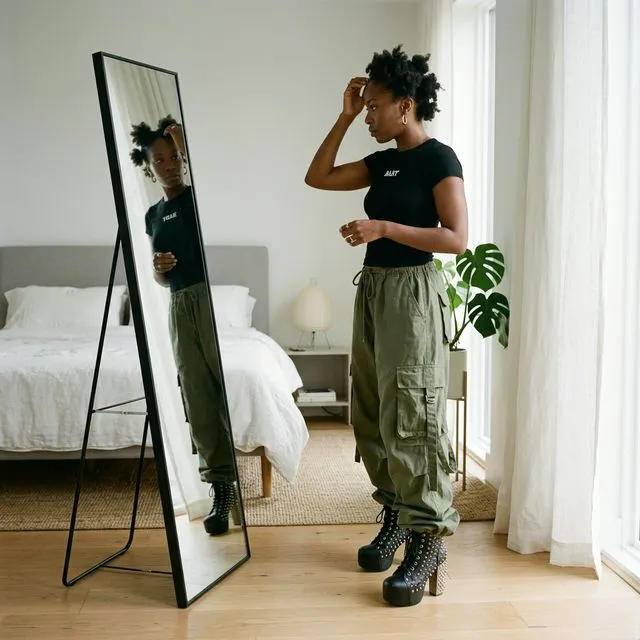
She slides her feet in. The weight is grounding. She stands five inches taller, looking at herself in the mirror. The Y2K outfit for work she chooses isn't the whole box; it's the contrast. She pairs the spiked boots with oversized cargo pants and a tiny baby tee. It is raw, unpolished, and unmistakably her.
The "Identity Wound" of the decade is the fear that we have been curated out of existence. We spend so much time looking 'professional' that we forget how to look 'iconic'. She walks into the kitchen and the sound of the wood on the floor is like a drumbeat. It is the sound of a woman who has decided that 'safe' is the most expensive thing she can wear.
Choosing the bold silhouette is the only way to remind the room that you are not just another piece of the furniture.
She spends the day navigating the city, the spikes catching on the edges of conversations. People look at the boots before they look at her eyes, and for the first time in years, she doesn't mind. She wears the Y2K outfit for work as a declaration of intent. She is no longer interested in being 'useful'. She is interested in being unforgettable.
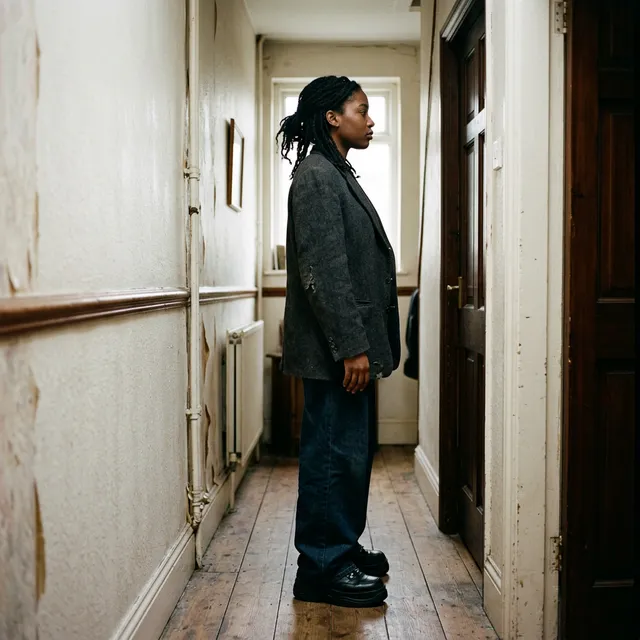
Years later, she will look at this photo and realize that we don't replace our clothes because they wear out. We replace them because we are wearing out our old ways of belonging.
She stands by the elevator and looks at the doors opening. She doesn't need to check the mirror. She knows that the woman who found the box is gone, replaced by the one who is finally ready to wear the spikes of her own making.
Spin the Y2K Fashion Wheel
Ready for platform sneakers, cargo denim, and statement boot styles? Spin the Y2K clothing wheel to recreate the look.
Spin the Y2K Wheel