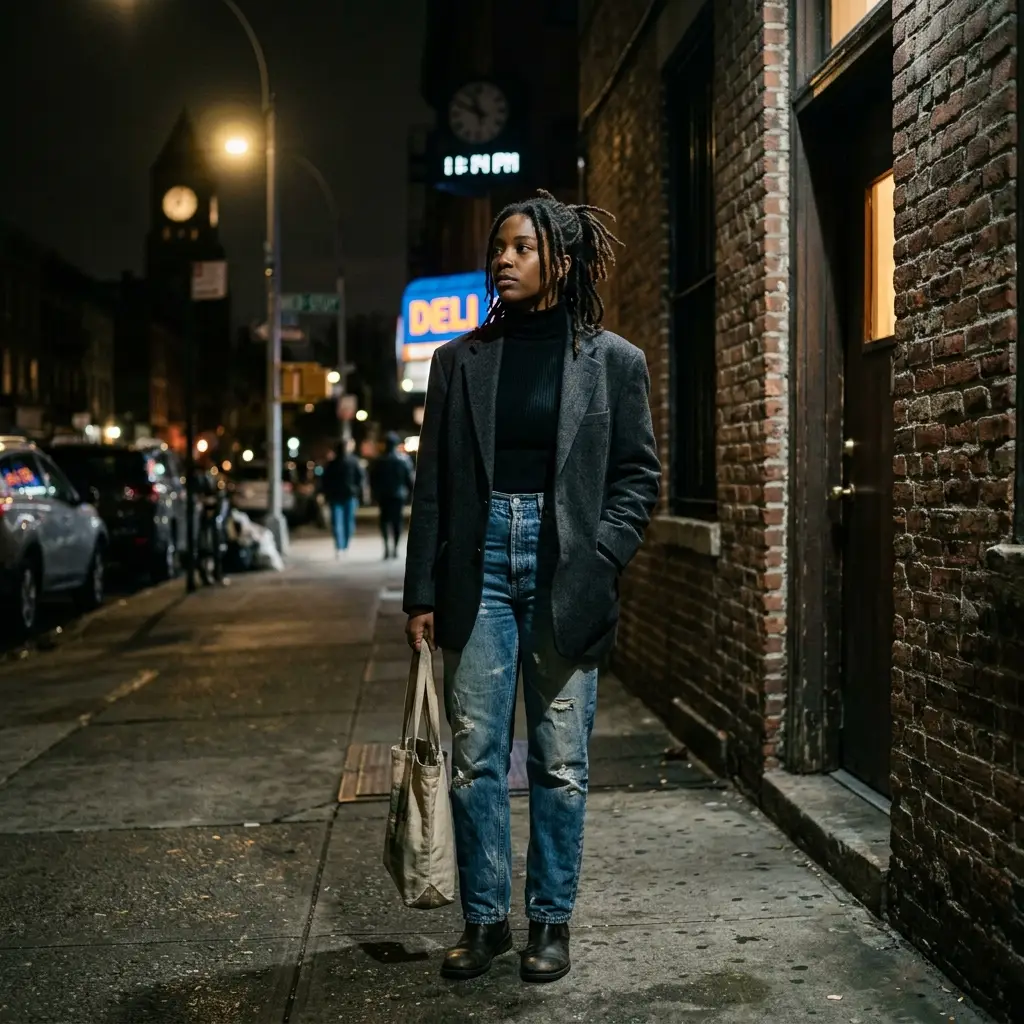
I see their eyes glaze over the moment I mention the cuff detail on this vintage wool blazer. To them, I inhabit a frivolous world—one that is fluffy and fake, silly and superficial, vain and vacuous.
They see a "costume." They see a girl trying too hard to look like she belongs in a 1920s Oxford library. But what they don't see is the quiet desperation behind the dark academia aesthetic.
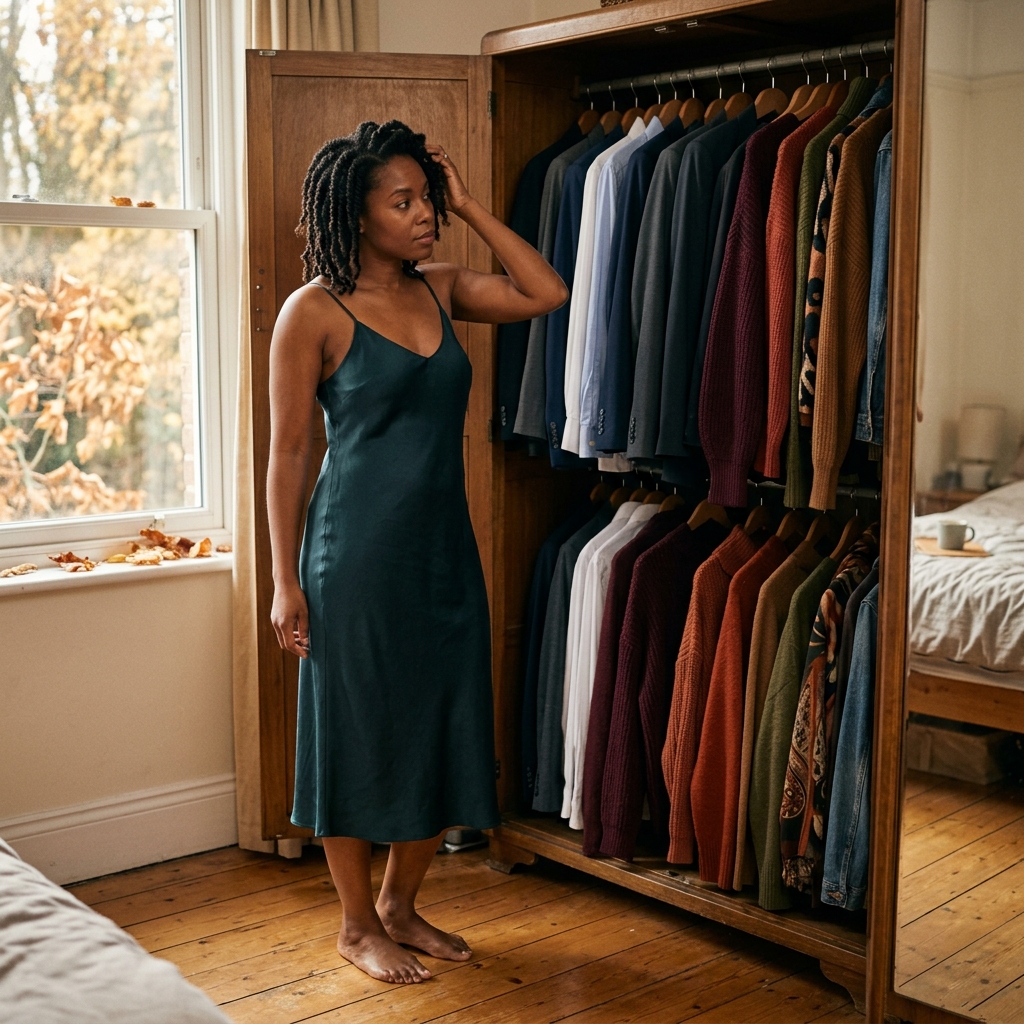
How many of us have stood in front of our wardrobes and said, time and time again, "I have nothing to wear," while surrounded by a hundred billion mass-produced items? We aren't looking for more clothes. We are looking for an anchor.
For me, dark academia fashion isn't just a trend; it's a shield. When I put on these structured blazers and pleated trousers, I'm trying to prove to the world—and to myself—that I am substantial. That I am not just "fluffy." We use these dark academia outfits to ground ourselves in a history that feels heavier and more real than the disposable fast-fashion cycle we’re trapped in.
But the ugly truth is that even in my best dark academia casual look, the insecurity remains. I’m still the same person underneath the tweed. I’m just hiding her inside a version of "intelligence" that I haven't quite earned yet.
"We are told that fashion is superficial, so we dress in 'serious' clothes to convince people we aren't."
The irony is that the fashion industry—this trillion-dollar engine that impacts every GDP on the planet—is treated as a silly ideal, yet we rely on it to tell the most important story of all: who we are.
When you stand in front of your closet tomorrow, ask yourself: Are you picking that blazer because it fits your style, or because you're terrified of being seen as "vacuous" without it?
Spin the Dark Academia Wheel
Peel back the layers of style. Spin the dark academia wheel to find structured blazers, turtlenecks, and classic brogues.
Spin the Academia Wheel