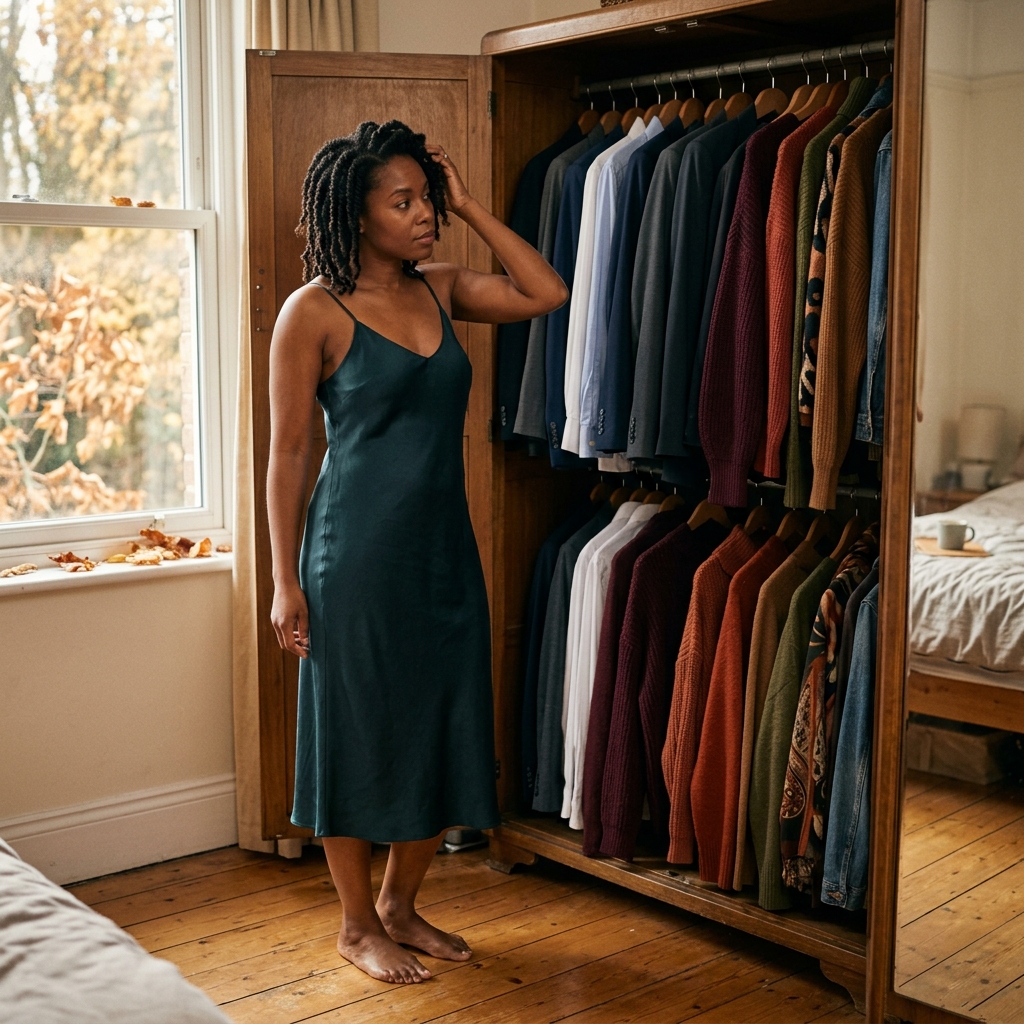
She left the job in March. By October, she was standing in front of her wardrobe at 7am and she could not move.
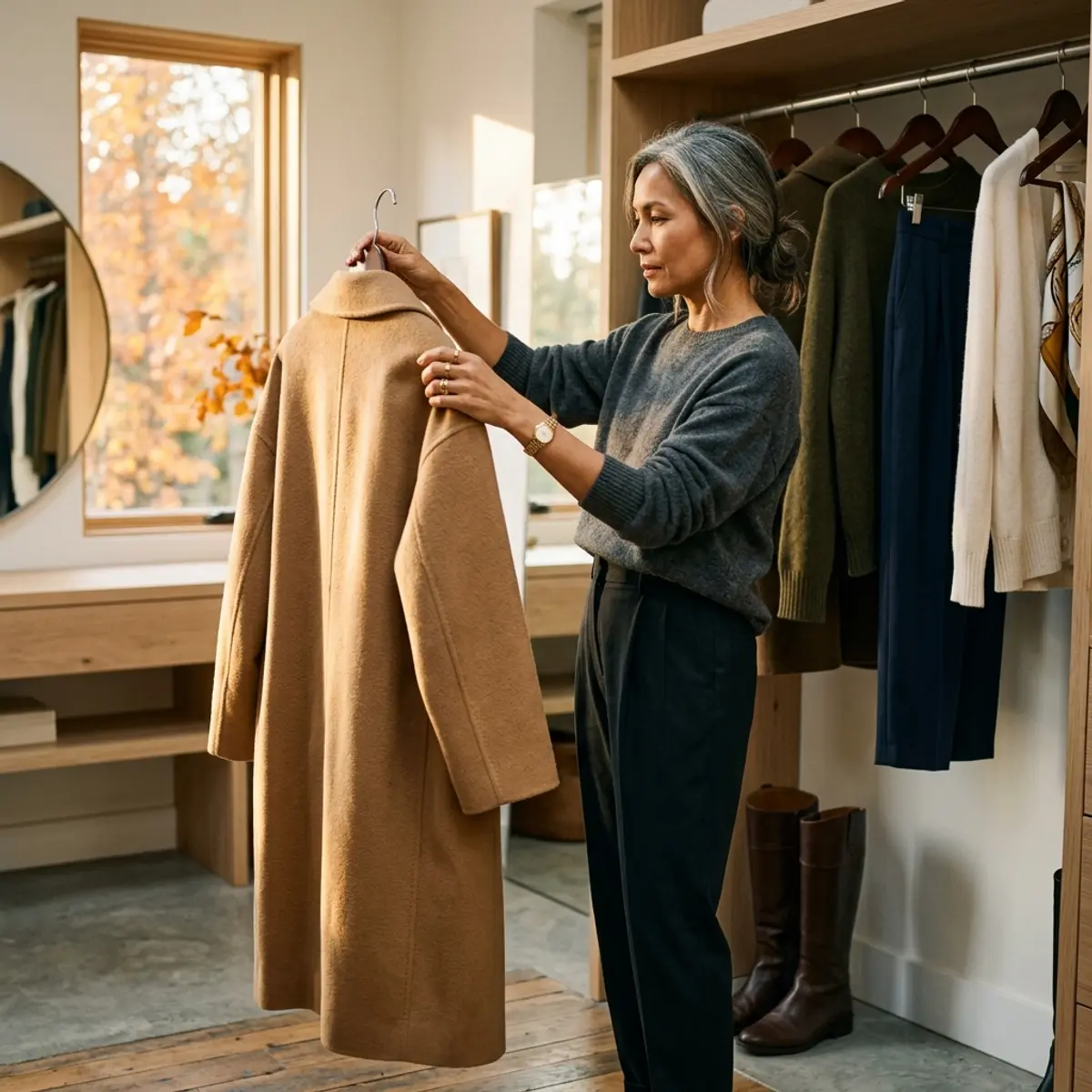
The clothes were still there. Every autumn fall outfit she had ever bought for the version of herself that clocked in before anyone else, that sat in glass-walled rooms and made decisions in a voice that did not waver. The camel coat. The structured black blazer with the notched lapels she had bought on a work trip to Johannesburg and worn to close a deal she still told stories about. The charcoal trousers pressed so flat they could stand up on their own. They were still hanging there, perfectly ordered, perfectly pressed. Belonging to a woman who no longer lived in this body.
She had walked away from everything she had built. Her clothes had not gotten the message yet.
The pivot had felt clean when she made it. It always does, in the moment of decision. She had told people: I needed to change. I needed to become something I actually recognised. And she had meant it. She had said it at dinner parties in the kind of voice that makes other women lean in and say, quietly, I think about that too. She had meant every word. She still did.
But autumn fall outfits are not decisions. They are evidence. You open the wardrobe and the clothes show you exactly who you were when you chose them, what you believed you needed to be, what you were willing to put on your body in exchange for belonging. And standing there in October, with the light coming through the window in that particular amber way that only happens in the colder months, she could see the whole shape of the woman she had been. Dark colours. Heavy fabrics. Nothing that moved when she moved.
She had not bought a single new thing since she left.
The autumn clothes she owned were the autumn clothes of a woman who no longer existed. But she did not yet know what the new version of her wore.
There is a wound nobody talks about when you change your life. Not the fear of the leap, not the grief of letting go, not the loneliness of the middle place where you are no longer who you were but not yet who you are going to be. The wound nobody talks about is the wardrobe. The fact that your clothes remember you even when you are trying to forget yourself. The fact that every morning in a season of transition, you have to open the door and stand there in front of the evidence of your old life and decide what to put on your body for a day that looks nothing like the days those clothes were made for.
She pulled out the camel coat. Held it at arm's length. It was a good coat, objectively. The kind of coat that cost enough to make you feel like you had made a serious choice. She put it on over her slip dress. Looked in the mirror. The woman looking back at her was someone she used to know very well. Someone she had been extremely good at performing.
She took it off and hung it back.
On the other side of the wardrobe — pushed to the very back, behind the things she wore regularly — there was a soft burgundy scarf she had bought at a market two years ago and never worn. She had bought it impulsively, the way you buy things when you are moving through a city alone and you want to feel like you are allowed to exist in it. It was the colour of late October. The colour of a season that asks nothing of you except to feel the temperature change.
She wrapped it around her shoulders and stood there for a long time.
It did not solve anything. It did not tell her who she was becoming or whether she had made the right decision or whether the new life would eventually feel as real as the old one. Autumn fall outfits cannot do any of that. But it was the first thing she had put on in seven months that did not belong to the woman she was trying to leave behind.
When you change your life, everyone asks about the decision. Nobody asks what you wear when you are standing in the middle of it, not yet arrived.
What do you do with the clothes that still know who you used to be?
Spin the Style Science Wheel
Unlock the psychological power of your wardrobe. Spin the style science wheel to try tech jackets, performance pants, and knits.
Spin the Style Science Wheel