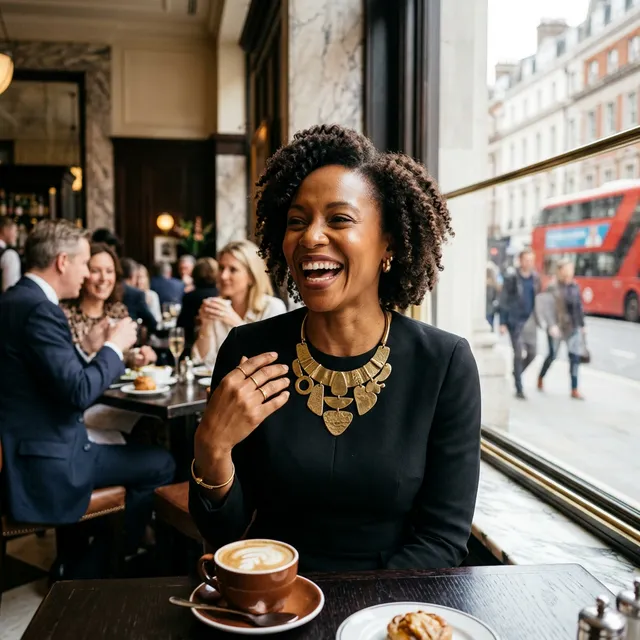
The cafe in Marylebone is a sensory overload—the rhythmic hiss of the espresso machine, the clinking of ceramic on marble, the polyglot chatter of Saturday morning. It is a room full of people who look like they have already figured it out.
She is laughing at something her friend just said, her head tilted back, the light from the large window catching the bold, sculptural brass of her necklace. It is a heavy piece. It is loud. It is impossible to ignore.
For years, this necklace had lived in a velvet pouch in the back of her drawer. She called it her "special occasion" piece. She was waiting for the perfect gallery opening, the perfect anniversary, the perfect version of herself that was worthy of such a statement. She was saving her shine for a future that was always six months away.
Wait-and-see wardrobes are the graveyards of our best versions. We die a little every time we choose the safe option over the true one.
The "statement necklace" has its roots in the jewelry of Ancient Egypt and the Maasai people of East Africa. For these cultures, jewelry was never "ornament"; it was biography. It told the world your status, your lineage, and your courage. The use of brass, specifically, is a tradition that spans centuries in West and East Africa, valued for its strength and its ability to gather light. In a modern context, reclaiming a piece like this for a "casual" cafe visit is a return to that original purpose—wearing your story on your body, every day, without apology.
She remembers the way her aunties in Nairobi would dress for a simple trip to the market. They wore their gold. They wore their vibrant prints. They carried themselves as if the dusty street was a royal procession.
"Why wait for the party?" her auntie would say, while adjusting a headwrap. "Life is the party, even when you're just buying tomatoes."
Standing in this cafe, with the brass warm against her collarbone, she realizes that the "someday" she was waiting for was just a cage she built for herself.
A bold piece of jewelry isn't a decoration. It is an anchor. It keeps you from drifting into the invisibility the world expects of you.
She reaches up and touches the cool metal. It feels solid. It feels like a promise kept.
She does not look at the other women in the cafe to see if they approve. She does not wonder if she is "too much."
She picks up her bag and feels the weight of the brass necklace shifting against her collarbone, a solid and unyielding presence that catches the London light through the cafe window, and she walks toward the door without checking the mirror in the corner, her fingers brushing the hem of her jacket while the bells above the entrance chime once to announce her departure into the grey, rain-slicked afternoon where the crowds are already moving in blurred patterns toward the station.
Spin the Daily Outfit Wheel
Stop waiting for the perfect occasion. Spin our daily outfit wheel to mix premium and casual pieces for today.
Spin the Daily Wheel