The news travels like a draft through the house in Wales. It falls to her mother to speak it out loud, to explain that the sensible path—the one paved with hard-earned savings and the promise of a law degree or a stable engineering role—has been abandoned at the border.
When she hears that he went into a dark room and stayed there, she doesn't feel the weight of his disappointment as a anchor. She feels it as a border crossing. She is sixteen, and she has already decided that the 90s outfits she sees in her mind are more real than the textbooks on her desk.
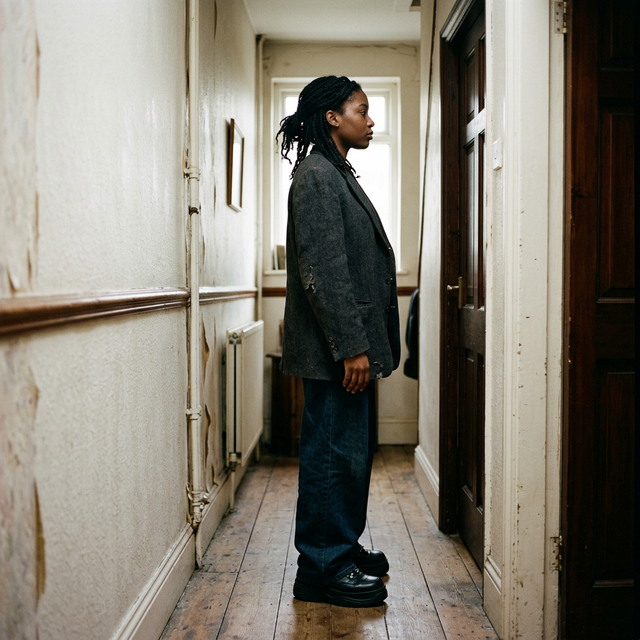
Most people who search for iconic 90s outfits are looking for a costume. They want the high-waisted denim and the cropped sweaters as a way to visit a decade they weren't invited to. But for her, standing in the narrow hallway of a London flat a year later, the oversized blazer isn't a vintage find. It is a skin.
Choosing your own name over the one your parents saved for is the most expensive thing you will ever wear.
The "Parental Wound" in fashion is the silence of the dark room. It's the fear that by choosing the creative path, you are choosing a life of instability that they worked their entire lives to protect you from. They see the 90s outfits and they see a frightening lack of a plan.
She wears her "Boy George" face into a room at Central St Martins. It is unpolished, raw, and unmistakably her. The charcoal blazer she found in a charity shop is heavy, like a protective layer of armor against the voices she left behind in Wales.
The 'sensible' job is a local fiction. The only real work is becoming the person you already are when nobody is watching.
She spends years traveling the world, living in the black spots on the map that her father feared she would never reach. She becomes a professor, a Vice Chancellor, a designer of futures. She gets the sensible job in the end, but she gets it on her own terms, wearing a 90s aesthetic that has become her own signature.
Years later, she realizes that fashion doesn't just thrive on change; it creates a desire for it. We don't replace our clothes because they wear out. We replace them because we are wearing out our old selves.
She stands in a hallway and looks at the door ahead. She doesn't need to check the mirror. She knows that the girl who left Wales is still there, beneath the professor's title, still wearing the oversized blazer of her own making.
The Tool: The 90s Oversized Blazer
The oversized blazer of the 1990s was the century's great eraser. It took the sharp, aggressive 'Power Suit' of the 80s and softened the edges. It wasn't about looking professional; it was about looking like you had already decided the rules didn't apply to you.
For the woman in our story, it acts as a bridge. It carries enough of the 'sensible' silhouette to be recognizable as clothing for a career, but the oversized fit allows the soul to breathe. It is a tool for the woman who is tired of being measured. What it costs her is the comfort of fitting in. When you wear a blazer that is intentionally the 'wrong' size, you are telling the room that you are no longer interested in their scale.