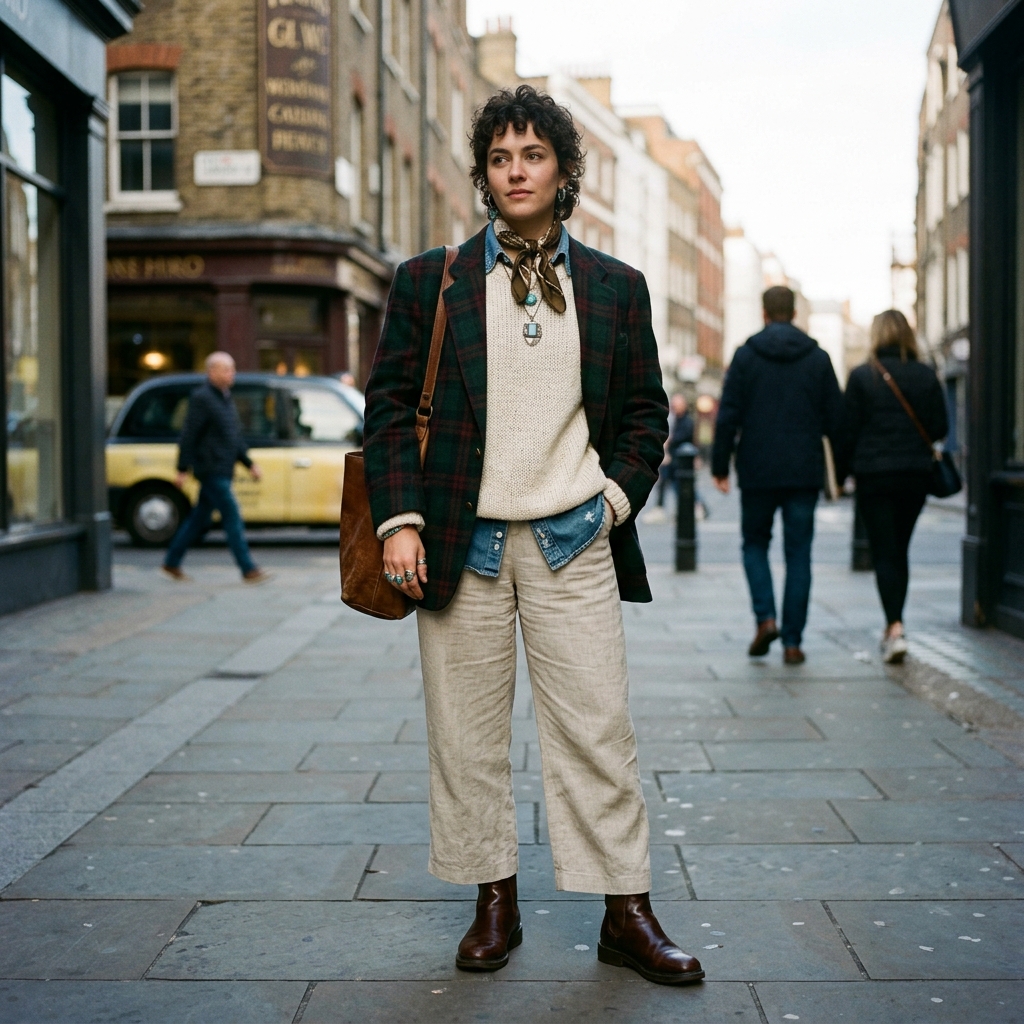
I see it every day. You stand there, towel-wrapped or half-dressed, staring into the dark geography of your closet. You have fifty shirts, three pairs of jeans you "mostly" like, and a jacket that cost more than your rent. But as you look at them, you feel a hollow, cold panic.
"I have nothing to wear," you whisper.
But here is the truth I’ve learned from reading thousands of outfits: That isn't a fashion problem. It's an identity crisis.
If you have nothing to wear, it’s usually because you don’t know who you are today.
The Labels We Wear (and the Ones That Wear Us)
We love to put people in boxes. The world sees a "heavyweight" designer, or a "housewife," or an "airhead," or an "icon." We collect these labels like stickers on a suitcase. But as a wise voice once told me, you have to be quite old to be "enduring," and you have to be quite tired to be an "icon."
These labels are just layers. They happen over time, and sometimes you can only really see them in retrospect. But the danger is when you start dressing for the label instead of for the soul underneath it. When you dress for the "Business Professional" you're supposed to be, rather than the person who actually has to do the work.
This is where the wound begins. You try to squeeze your multilayered self into a single, flat label, and your wardrobe rebels.
The Anchor: "Epsy"
There is a word — *Ips-e* or "Epsy." It’s the meeting point of the self and the divine. Think of it as your internal anchor. An anchor isn't a rigid thing that keeps you stuck; it’s the center that allows you to shift, to change your hair, to try a different street style fashion look, without drifting away into someone else's story.
The Canary in the Coal Mine
People think fashion is fickle. They think we just follow trends because some group of people in Paris or Milan decided it was "time." But street style fashion is actually a canary in a coal mine. It tells us exactly what is going on in the fractured, violent, and messy world we live in.
After 9/11, nobody wanted to wear camouflage. In 2008, when the financial world melted down, we all wanted to get back to the basics—simple, honest clothes. And today? When the world feels louder and more despairing than ever, we look for an escape.
That’s why you see combat boots on Madison Avenue and 4x4s in city traffic. We are all dressing to escape, to disappear, or to belong somewhere that feels safer than here. Your street style looks aren't just clothes; they are your response to history.
Fashion doesn't change history. It reflects the change that has already happened in our hearts.
Breaking the Addiction
Fashion can be as addictive as anything else. We all know that "hit"—the flush of happiness when we find that one piece that makes us feel high for ten minutes. We buy it, we take it home, and then... the "downer" hits. The credit card bill arrives, and the dress goes to the back of the closet, joining the other ghosts.
Stop being a victim. Reclaiming your style isn't about buying more; it's about "interrogating your personality." It's about finding that "Epsy" anchor where you honestly don't give a damn what anyone has to say, because you finally know which layer of yourself you are showing to the world today.
Your street style fashion should be proof of your character, your temperament, and your selfhood. It should be your integrity made visible.
So, tomorrow morning, when you stand before that closet, don't ask "What is in style?"
Ask: "Who am I today?"
Spin the Street Style Wheel
Stop comparing and start wearing. Spin our street style fashion wheel to find outfits tailored to your unique identity.
Spin the Street Style Wheel