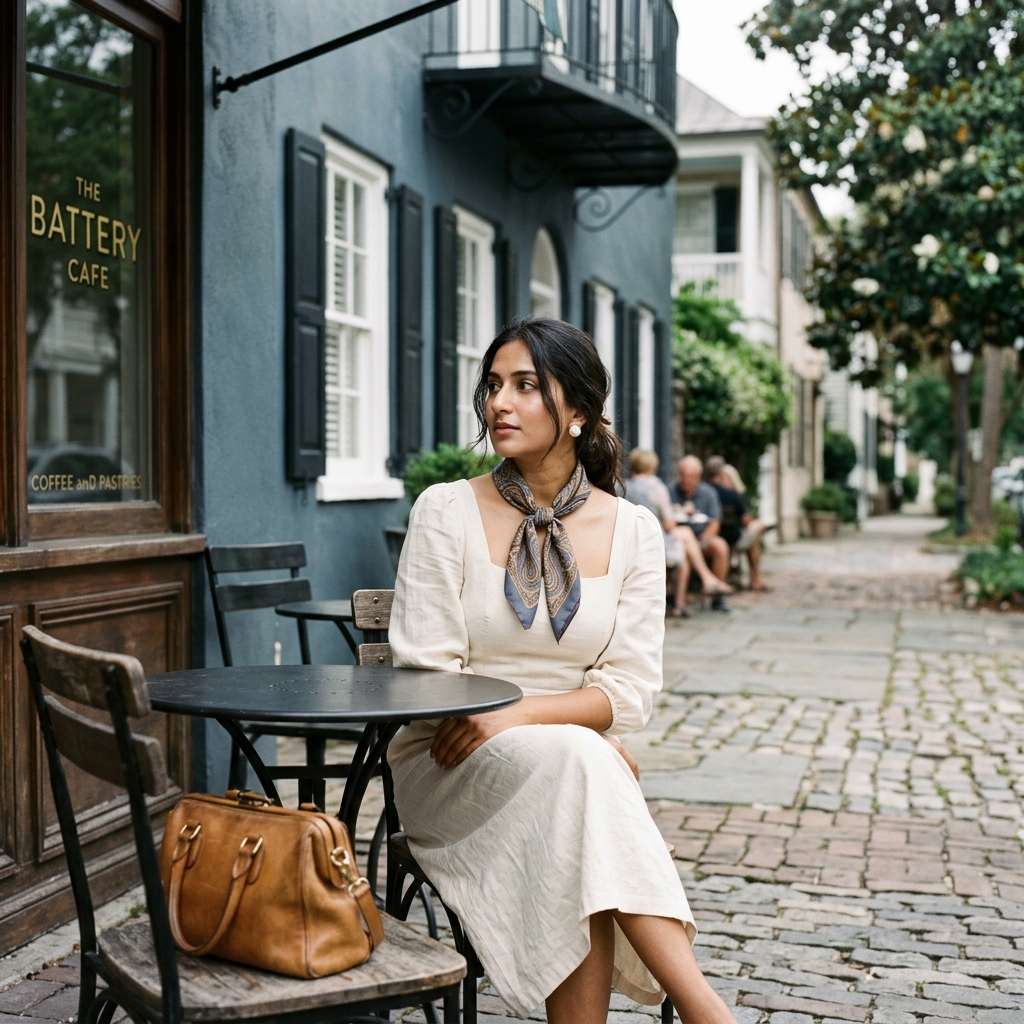
Amara sat at the corner table of a cafe on Church Street. The morning sun was hitting the wrought-iron gates across the road, casting shadows that looked like old lace. She was thirty-two, a woman who carried the humidity of the South with a stillness that made her look like she had been here for a hundred years.
She was wearing a cream-colored linen midi dress, a silk scarf tied around her neck, and pearl earrings that had belonged to her grandmother in Colombo.
She knew what the magazines called it. They called it old money style.
But for Amara, the clothes were a visual language of fashion. They were her way of telling the cobblestone streets that she wasn't just a visitor. She was trying to fit into a story that hadn't been written for her—a history of garden parties and generational wealth that her family had built in a different hemisphere, but which looked suspiciously the same under the Charleston sun.
"My mother used to say that true old money is in the way you hold your cup, not the price of it. I'm still learning to hold mine without looking at the door."
There is an act of incredible vulnerability in trying to 'pass' in a city that remembers everything. Every time she stepped out in the linen and the pearls, she felt the weight of it—the terror of putting on a dress and wondering if the world will see you as you see yourself, or if they will just see the effort.
She looked at the leather handbag on the chair beside her. It was old. It was perfect.
She sipped her coffee. She didn't look at the tourists walking by. She looked at the shadows on the road.
The gates didn't open.
She didn't move.
The linen knew things she was still learning.
— Amara, 32, Charleston
Spin the Old Money Style Wheel
Drape yourself in silk slip dresses, tailored trousers, and timeless loafers. Spin the old money style wheel.
Spin the Old Money Wheel