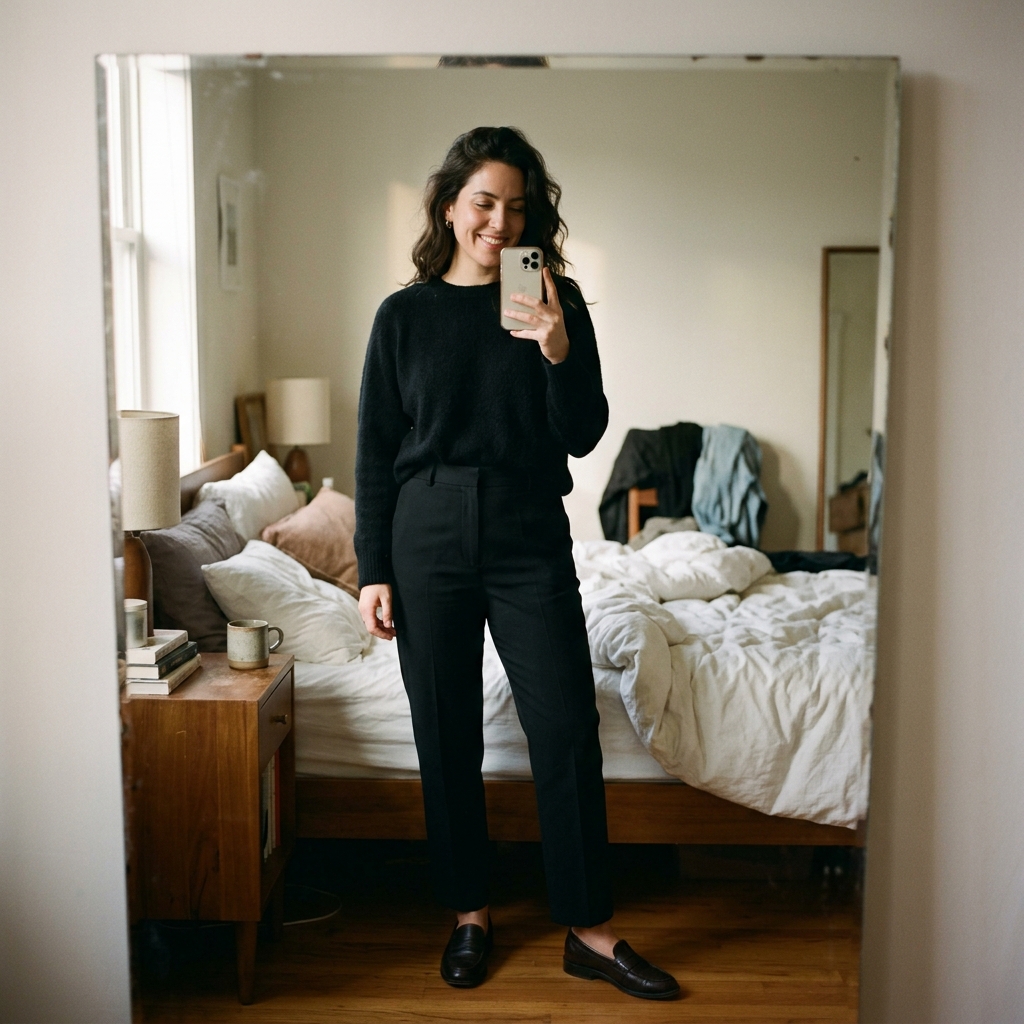
The black dress pants had been folded at the very bottom of her drawer for three years, unworn but somehow impossible to discard. She thought keeping them would preserve the raw ambition she felt on her first day at the downtown firm.
Instead, seeing them every morning just reminded her of a version of herself she no longer recognized. We don't hold onto clothes because we think we'll wear them again; we hold onto them because we're terrified of erasing the history woven into the seams.
How do you let go of a garment when it feels like letting go of who you used to be?
For Sarah, a marketing director in London, those black dress pants represented a lifeline. She bought them when she was twenty-three, terrified, and desperate to be taken seriously in rooms full of men twice her age. They were her armor. Today, they don't fit her body, and they certainly don't fit her life. But every time she puts them in the donation bag, a quiet panic sets in. Throwing away the pants feels like throwing away the girl who fought so hard to get her here.
Eight thousand miles away in Singapore, Chloe stands in front of a similar donation pile. For her, it isn't black dress pants; it's a heavily beaded cocktail dress she wore to a music festival with a friend she hasn't spoken to in five years. The dress is frayed. The friendship is over. But holding the fabric feels like holding the only tangible proof that the memory actually happened.
The global waste crisis tells us that we have produced enough clothing to dress the next six generations. We read the statistics about overflowing landfills and rivers choked with synthetic garments. We know we need to clear out our closets.
But the friction isn't just logistical. It's profoundly emotional.
"We are asked to treat our garments like disposable goods, but we experience them as emotional archives."
When we are asked to declutter or donate, we are essentially being asked to curate our own museum of past selves. The hesitation you feel holding those black dress pants isn't hoarding. It is grief. It is the realization that a specific chapter is definitively closed.
You are no longer the twenty-three-year-old fighting for a seat at the table. You are at the table. You don't need the armor anymore.
Designing better goodbyes for our clothes means acknowledging the weight they carry. It means understanding that "worn out" is not the same as "worthless." The fabric may be tired, but the story it holds is eternal.
If we change how we say goodbye to our things, we change how we let go of our past selves. The question isn't whether the black dress pants still fit your waist. The question is: are you finally ready to let her go?
Spin the Fresh Start Wheel
Clear out the emotional clutter of your wardrobe. Spin the outfit anxiety wheel to discover a fresh style direction.
Spin the Fresh Start Wheel