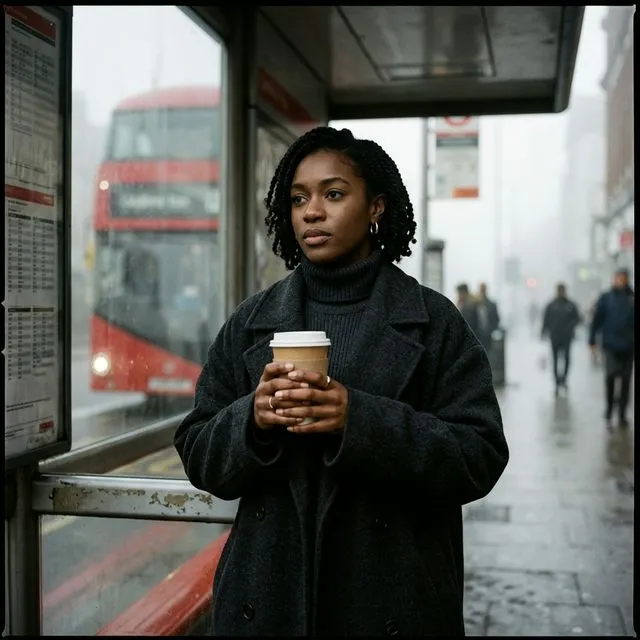
The bus stop smells of wet pavement and the sharp, metallic tang of the morning commute. It is a gray Tuesday in the city, the kind where the mist clings to your eyelashes like a secret. She stands there, fingers curled around a paper cup that is losing its heat faster than she’d like to admit.
She is wearing an oversized wool coat over a simple charcoal knit.
Across the street, the specialty roastery is already humming. She can see the warm glow of the Edison bulbs through the glass. In five minutes, she will be sitting across from someone who—until now—has only existed in the blue light of her phone screen.
"Keep it casual," he had said.
It is the most dangerous instruction in the modern dating lexicon. In a city where everyone else seems to be wearing a ten-thousand-dollar dress or at least a map of where they’re going, "casual" feels less like a dress code and more like a test.
A coffee date outfit isn't just about the clothes. It is about the calibration of hope against the reality of a plastic chair.
She adjusts her collar. The coat is heavy, a shield against the judgment she imagines is waiting for her inside. She wonders if she looks effortless, or if she just looks like she didn't finish getting ready.
The "casual" coffee date is a product of the Third Space—a concept popularized by sociologist Ray Oldenburg. These are the neutral grounds between work and home where we perform the rituals of connection. Because these spaces are informal, we assume the dress code should be, too.
But the history of the "off-duty" look is rooted in a specific kind of privilege. It was the leisure class of the early 20th century who first discarded the corset and the stiff collar for the 'relaxed' silhouette of the country club. To be casual was to signal that you didn't need to work.
Today, for her, it signals something else entirely. It signals a desire to be seen for who she is, even while she uses the coat to hide the part of her that is absolutely terrified of being rejected over an oat-milk latte.
effortlessness is the most expensive thing you can wear. It costs you every ounce of your certainty.
She sees him through the window now. He’s already there, checking his watch. He’s wearing a hoodie under a denim jacket.
She takes a breath. The mist has turned into a light drizzle.
She walks toward the door, the wool of her coat swinging against her shins with a steady, grounding weight while the bell above the entrance chime a sharp, cheerful note that cuts through the low chatter of the room, and she doesn't stop to check her reflection in the glass or adjust the tuck of her sweater, she just moves into the warmth of the roasted beans and the yellow light, her hand already reaching for the latch before she has time to wonder if she should have worn the boots instead.
Spin the Coffee Date Wheel
Keep it effortless and authentic. Spin our coffee date wheel for casual denim, sneakers, and cozy layered tops.
Spin the Date Wheel